
When most people think of “IT,” they picture someone fixing a laptop, resetting a password, or troubleshooting Wi-Fi. And while those things can be part of the job, they only tell a small part of the story.
When students from Lift For Life Academy visited ThrottleNet for their annual field trip, what mattered most to us was not simply showing them what we do. It was showing them what’s possible.
For us, opportunities like this are about more than technology. They’re about connection, exposure, and helping students see that careers in tech are not distant or out of reach. They’re real, meaningful, and open to people with all kinds of strengths and interests.
We’re grateful to be one stop on that journey.
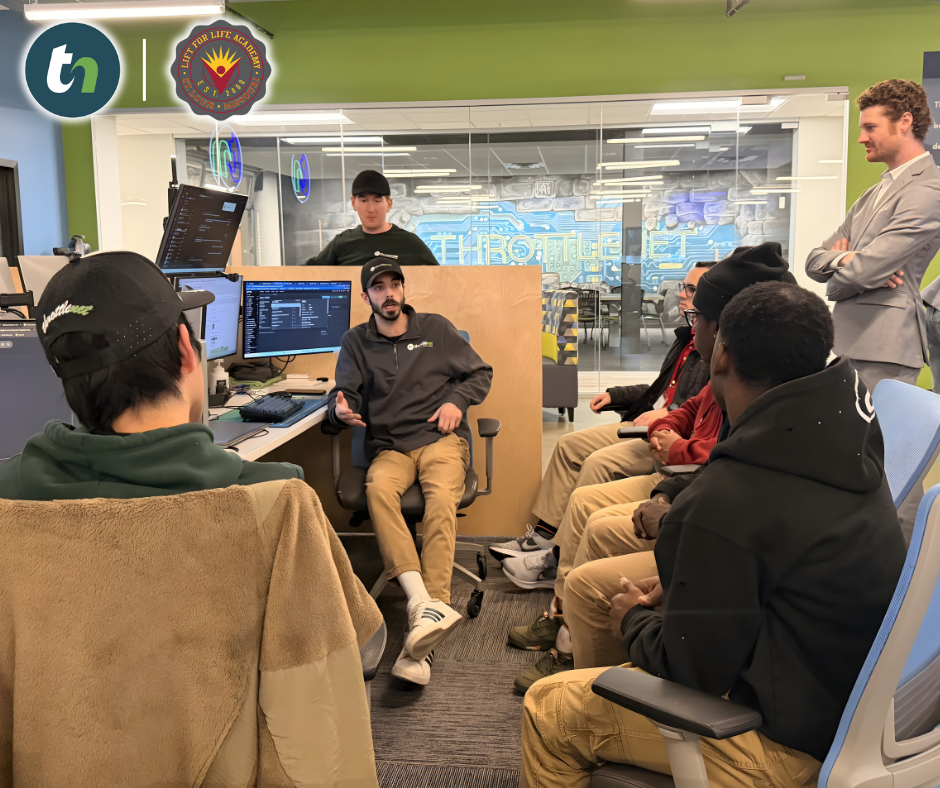
Showing Students the Human Side of Technology
One of the most important things we hope students take away is that technology is not just about devices or software. It is about people working together to solve problems, support others, and build systems that help organizations function every day.
That is a powerful shift in perspective. Students often come in expecting to see only screens, cables, and technical jargon. What they discover instead is collaboration, communication, planning, patience, and teamwork.
That matters because it broadens who feels welcome in the field. A student does not have to fit one narrow stereotype to belong in tech. There is room for different personalities, strengths, and working styles. Some people are natural troubleshooters. Others are planners, organizers, communicators, or big-picture thinkers. Helping students see that range can make the industry feel more open and more attainable.
Real-World Learning Creates Real Context
There is a big difference between hearing that technology careers exist and actually seeing what those careers look like in practice.
A student visit can help answer questions that are hard to address in a classroom alone:
- What does a normal day in technology actually look like?
- How do teams work together under pressure?
- What kinds of challenges come up behind the scenes?
- What skills matter beyond technical knowledge?
- How does technology support the larger community?
Those kinds of experiences add context that students cannot always get from a video, a brochure, or a job description. They get to observe the pace of the work, the problem-solving involved, and the way people depend on one another. That kind of exposure helps students build a more realistic understanding of the field.
Technology Careers Are Broader Than Most Students Realize
Another reason these visits matter is that they expand students’ view of what “working in tech” can mean.
Too often, technology gets reduced to a single job type or a vague idea of “computer work.” In reality, it is a broad field with many different paths. Some roles focus on support and communication. Others center on planning, system design, security, process improvement, or long-term projects. Many involve a blend of technical skill and people skill.
That variety can be encouraging for students who are still figuring out where they fit. They begin to see that there is not one doorway into tech. There are many.
When students understand that the field includes different kinds of thinkers and contributors, they are more likely to imagine themselves in it.
Why Conversations About AI and Automation Matter
Students hear about AI and automation constantly, but not always in ways that make the topics useful or understandable. That is why it is important to talk about them in practical, grounded terms.
Instead of treating them like futuristic buzzwords, we see value in showing students how these tools fit into everyday work. Used responsibly, they can reduce repetitive tasks, improve consistency, and help people focus their attention where judgment and decision-making matter most.
That lesson is bigger than technology alone. It teaches students that tools are only as valuable as the people using them. Critical thinking still matters. Accountability still matters. Good judgment still matters.
Helping students understand that balance is part of preparing them for the real world, where success depends not just on knowing what tools exist, but on knowing how to use them responsibly.
Communication Is Part of the Skill Set
One of the most eye-opening lessons for students is often this: being good at technology also means being good with people.
Clear communication, thoughtful questions, calm decision-making, and strong documentation may not always be the first things students associate with tech careers, but they are essential. In many environments, the ability to explain a problem, guide someone through a solution, or work effectively with a team is just as important as technical ability.
That realization can be especially meaningful for students who may have an interest in technology but do not yet see themselves as “technical enough.” It helps them recognize that many strengths are valuable in this field, including empathy, organization, curiosity, and composure.
Community Investment Starts Before a Career Begins
A strong local technology community does not begin when someone lands their first job. It begins much earlier, when students are given opportunities to explore, ask questions, and picture themselves in spaces they may never have entered otherwise.
That is why student visits are worth saying yes to.
They help close the distance between education and opportunity. They make professional environments feel more approachable. They give students a better sense of what is possible in their city and community. And they remind all of us that the future workforce is shaped long before a résumé is written.
Why These Experiences Stay With Students
What makes these visits meaningful is not just the information students hear. It is the feeling they leave with afterward.
They leave with a clearer picture of what a technology workplace looks like. They leave knowing the field is made up of real people, not just job titles. They leave having seen that problem-solving can be collaborative, that professionalism can be approachable, and that there are many ways to contribute.
For some students, that experience may simply make the industry feel less intimidating. For others, it may be the first moment a future career starts to feel possible.
Either outcome matters.
Gratitude for the Educators and Organizations Making It Happen
Experiences like these only happen because educators and community partners put in the effort to connect students with learning beyond the classroom. That work has a lasting impact.
We are grateful for schools and organizations that create those opportunities and for the students who show up curious, engaged, and ready to learn. Giving young people real-world exposure to technology careers is not just good for them individually. It strengthens the broader community by helping the next generation see where they can grow, contribute, and belong. We’re always glad to be part of that learning.

Jeremiah Jeffers
Sales & Business Development Associate
[email protected]